
A metal roof can protect a home for decades, but that does not mean every metal is equally suitable for every house. Choosing the wrong material could mean paying for features you do not need or getting a roof that does not suit your home well.
If you are building a home for the first time, replacing an aging roof, or simply handling the decision for your family, one of the first questions is what type of metal should the roof be made from?
Steel, aluminum, copper, and zinc each have different strengths. They vary in cost, weight, corrosion resistance, appearance, maintenance needs, and long-term performance. Understanding these differences first makes it much easier to narrow down the right option for your home.
Main Types of Metal Roofing Materials
Most residential metal roofs are made from steel, aluminum, copper, or zinc. These are the actual roofing materials, and each one differs in cost, weight, appearance, corrosion resistance, and long-term performance.
A roofing style is different from the material itself. For example, standing seam is a style of metal roofing, not a type of metal. A standing seam roof can be made from steel, aluminum, copper, or zinc. In simple terms, the material tells you what the roof is made from, while the style describes how the metal is shaped and installed.
1. Steel Roofing
Steel is one of the most common metal roofing materials for homes because it offers a good balance of strength, durability, availability, and cost. It can be used for standing seam roofs, exposed-fastener panels, metal shingles, and several other roofing styles.
Bare steel can rust when exposed to moisture, which is why roofing manufacturers protect it with a metallic coating. Two common coating systems are galvanized steel and Galvalume steel. Galvanized steel uses a zinc coating, while Galvalume uses a coating made mainly from aluminum and zinc. Many steel roofing products also have a painted finish for extra protection and a wider choice of colors.
For many homeowners, steel is a practical option because it provides the durability of metal roofing without the premium price of copper or zinc. One important consideration is corrosion protection. The quality of the coating, finish, installation, and protection of cut edges or damaged areas can affect how well the roof resists rust over time.
Steel is worth considering if you want a durable, widely available metal roof with several style and price options. The specific steel product, coating, and roofing system should still be matched to your property and local conditions.
2. Aluminum Roofing
Aluminum is a lightweight and naturally corrosion-resistant metal roofing material. Unlike steel, it does not rust when exposed to moisture because aluminum forms a protective oxide layer on its surface. This makes it especially useful where corrosion resistance is an important concern.
Its low weight can also reduce the load placed on the roof structure, and aluminum can be formed into standing seam panels, shingles, and other residential roofing styles. Many aluminum roofing products are factory-finished or painted to improve appearance, add surface protection, and provide different color options.
The main trade-off is cost and strength. Aluminum generally costs more than steel and is a softer metal, so it can be more susceptible to visible denting from large hail or falling debris. Its greater thermal movement also means the roofing system must be installed in a way that allows the metal to expand and contract properly.
Aluminum is worth considering if you want a lightweight roof with excellent corrosion resistance, particularly where moisture or salt exposure is a major concern, and you are willing to pay more than you typically would for steel.
3. Copper Roofing
Copper is a premium metal roofing material known for its distinctive appearance, corrosion resistance, and exceptionally long service life. New copper has a bright reddish-brown color, but its appearance changes naturally as it ages. Over time, the surface darkens and can eventually develop the familiar blue-green patina seen on older copper roofs.
The patina is not only an aesthetic feature. It forms a protective layer over the copper and helps shield the surface from further weathering. Because this protective layer develops naturally, a properly installed copper roof generally requires relatively little routine maintenance.
Copper is also highly workable, which makes it useful for curved sections, dormers, valleys, and other detailed architectural areas. However, it is one of the most expensive metal roofing materials, and installation often requires contractors with experience working specifically with copper.
Because of the high cost, homeowners do not always use copper across the entire roof. It can also be used selectively on porches, bay windows, dormers, or other architectural features where its appearance can add character without the cost of a full copper roof.
Copper is worth considering when long-term durability, low maintenance, and distinctive architectural appearance are more important than keeping the initial cost low. Homeowners should also be comfortable with its natural color change, since the patina is part of how copper ages and protects itself.
4. Zinc Roofing
Zinc is a premium metal roofing material valued for its long service life, corrosion resistance, and low maintenance needs. Natural zinc starts with a brighter metallic appearance, but exposure to air and moisture gradually changes the surface and develops the soft gray patina commonly associated with zinc roofs.
This patina does more than change the roof’s appearance. It forms a protective layer that helps slow corrosion as the roof ages. Minor surface scratches can also become less noticeable over time because the exposed zinc gradually develops a new protective patina. This natural protection is one reason a properly designed and installed zinc roof can require relatively little routine maintenance.
Zinc roofing also offers sustainability benefits. Its long service life can reduce the need for frequent roof replacement, and the material can be recycled at the end of its useful life. For roofing applications, zinc can also be formed around curves, complex roof shapes, and detailed architectural features.
The main trade-offs are cost, availability, and specialized installation. Zinc is more expensive than common steel roofing systems, and zinc roofing products and experienced installers may not be as widely available. Proper detailing is also important because the roof needs suitable conditions for its protective patina to develop correctly.
Zinc is worth considering if you want a long-lasting, low-maintenance roof with a natural gray appearance and are comfortable investing in a more specialized premium roofing material.
Quick Comparison of Metal Roofing Materials
| Material | Cost Level | Corrosion Resistance | Weight | Appearance | Maintenance | Best Fit |
|---|---|---|---|---|---|---|
| Steel | Moderate | Good with proper coating | Moderate | Wide range of colors and styles | Moderate | Homeowners seeking a strong balance of durability, availability, and cost |
| Aluminum | Moderate to high | Excellent | Very light | Available in multiple finishes and colors | Low | Homes where low weight and strong corrosion resistance are priorities |
| Copper | Premium / very high | Excellent | Moderate | Reddish-brown when new; develops a natural patina over time | Low | Premium homes, architectural details, and homeowners prioritizing longevity and distinctive appearance |
| Zinc | Premium / very high | Excellent | Moderate | Metallic when new; develops a natural soft-gray patina | Low | Premium projects where longevity, low maintenance, and natural appearance are priorities |
Cost levels are relative comparisons. Actual roofing costs depend on the roof design, material thickness, roofing system, labor requirements, and local availability.
Metal Roofing Styles Are a Separate Choice
After choosing the metal itself, you also need to decide what roofing style or profile you want. Steel, aluminum, copper, and zinc can be formed into different roofing systems, and this choice affects the roof’s visual design, installation method, maintenance needs, and overall installed cost.
Common residential options include standing seam panels, corrugated panels, metal shingles, and profiles designed to resemble tile or slate. The right style depends on your home’s architectural design, budget, and the type of roofing system you prefer.
1. Standing Seam Metal Roofing
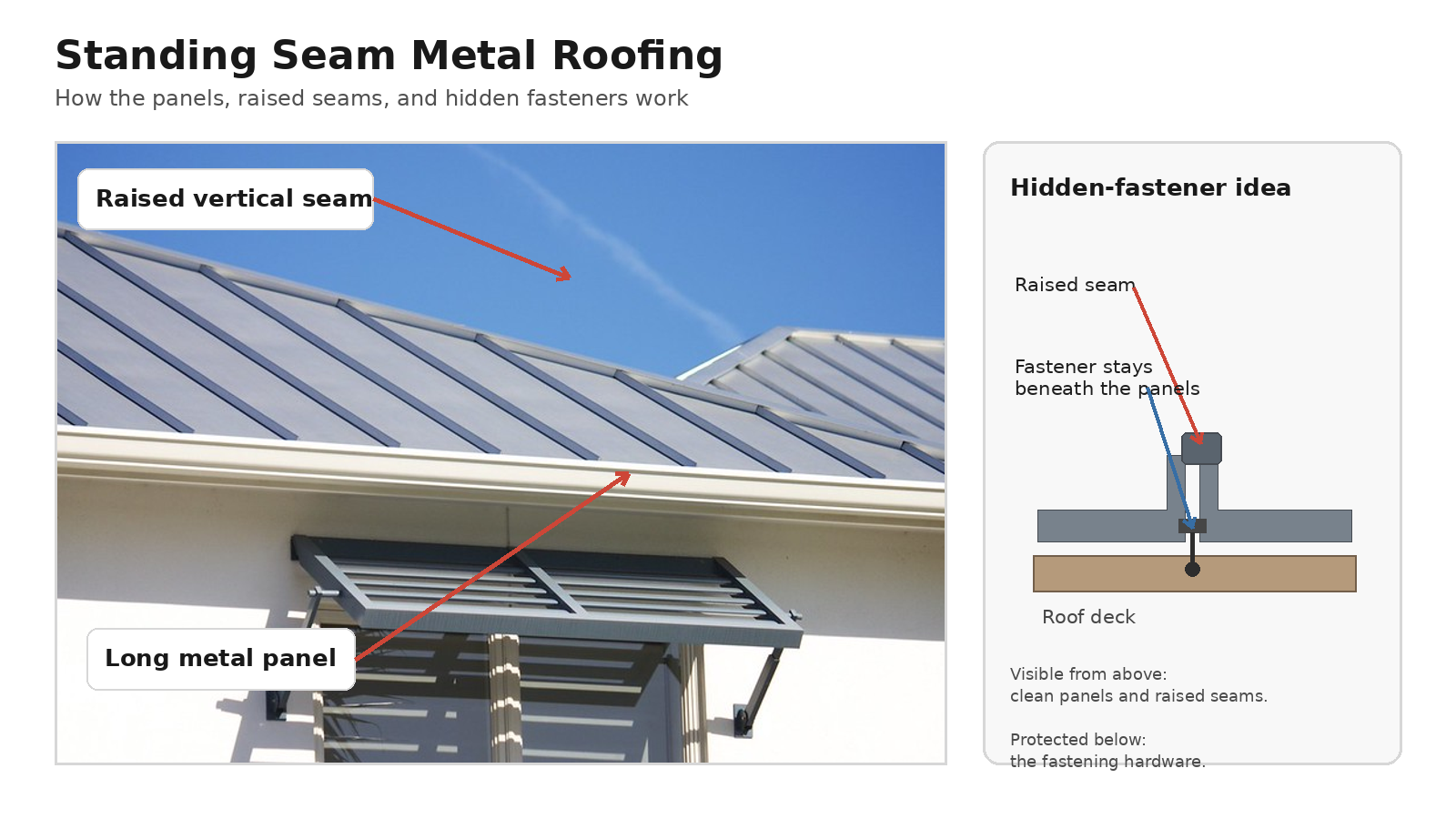
Standing seam roofing uses long metal panels with raised vertical seams running down the roof. These straight lines give the roof a clean, modern appearance.
The screws and fasteners are usually hidden beneath the panels instead of being exposed on the roof surface. This helps protect them from weather and allows the metal panels to move slightly as temperatures change.
Standing seam roofing is popular for its clean appearance, durability, and concealed fastening system. It can be made from steel, aluminum, copper, or zinc.
The main drawback is cost. Standing seam usually costs more to install than basic exposed-fastener metal panels because it requires a more specialized roofing system and installation process.
2. Corrugated Metal Roofing
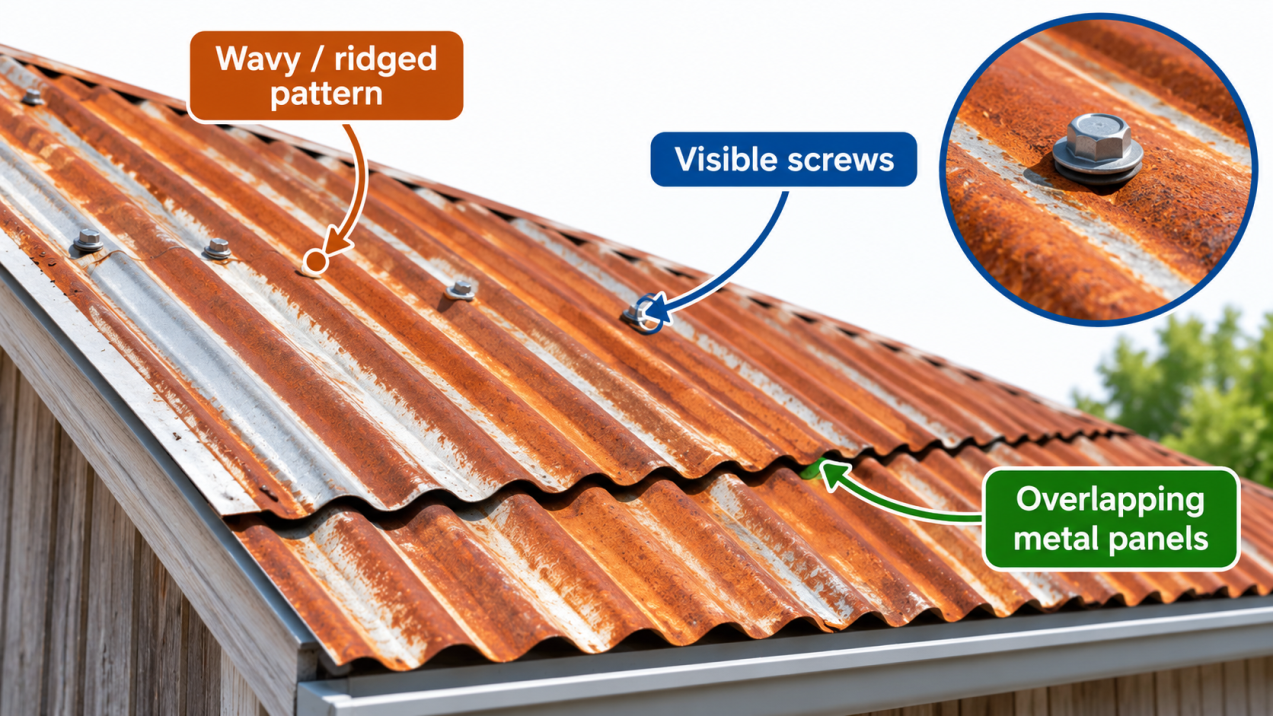
Corrugated metal roofing uses sheets with a repeating wavy or ridged pattern. These raised and lowered sections add strength to the sheet and give the roof a more traditional appearance than standing seam roofing.
The panels are often attached with visible screws that pass through the metal into the roof structure. This makes corrugated roofing simpler and generally less expensive to install than concealed-fastener systems such as standing seam.
Corrugated roofing can be made from different metals, but coated steel is a common choice. It is worth considering if you want a durable metal roof at a lower installed cost and do not mind the visible fasteners or more industrial-style appearance.
3. Metal Shingles
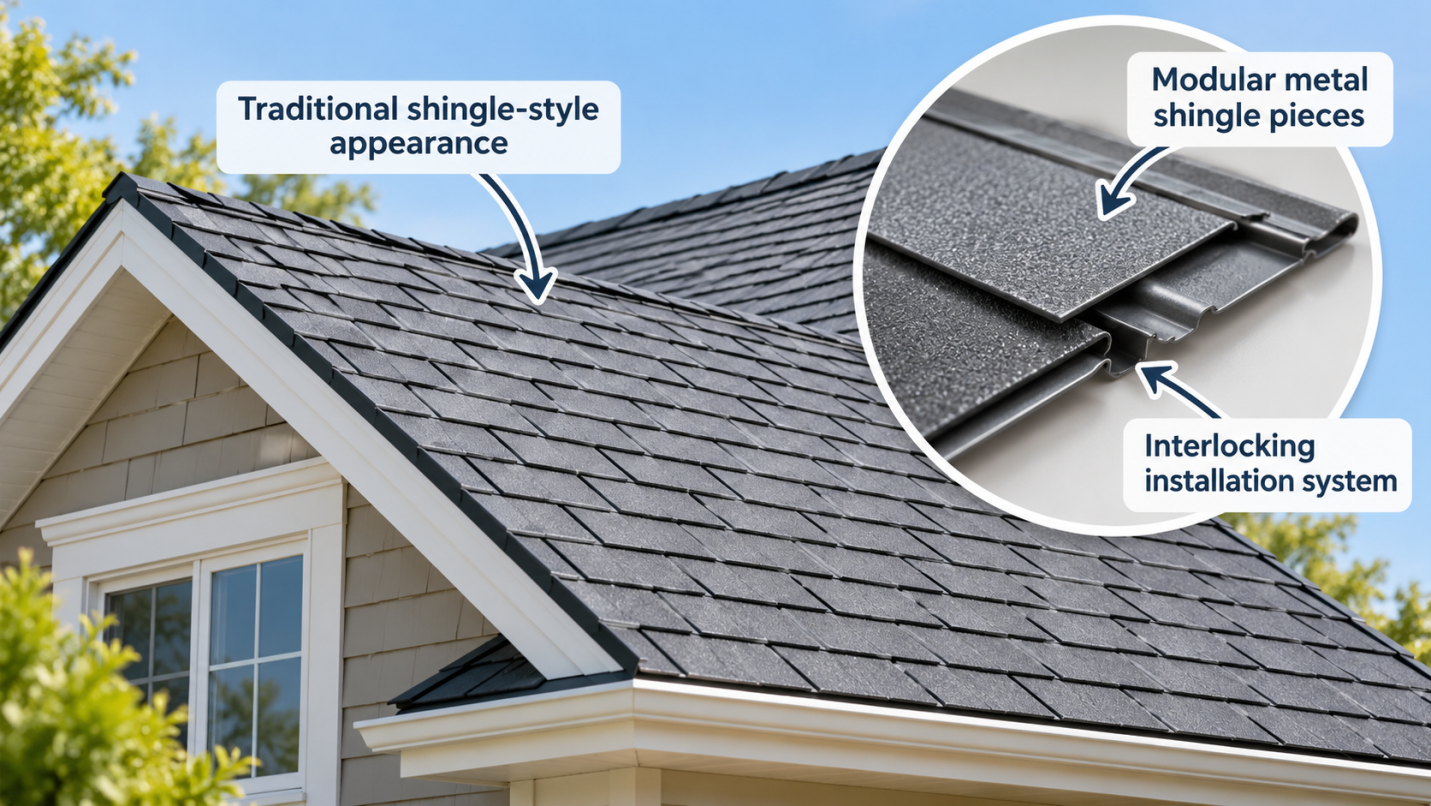
Metal shingles are small, modular metal roofing panels designed to give a home the familiar appearance of traditional shingles rather than the long-panel look of standing seam or corrugated roofing. Many products are made to resemble asphalt shingles and are available in different colors and finishes.
They are a good option for homeowners who prefer a traditional residential roof appearance but still want a metal roofing system. Metal shingles generally cost more to install than basic exposed-fastener panels because the roofing system requires more individual pieces and detailed installation.
Exposed vs. Concealed Fasteners
Metal roofing panels are generally attached using either exposed fasteners or concealed fasteners. The difference is simple: in one system, the screws remain visible on the roof surface; in the other, the fastening hardware is hidden beneath the panels or seams.
With an exposed-fastener system, screws pass directly through the metal panels into the roof structure. The screw heads and sealing washers remain visible from above. Corrugated metal roofing commonly uses this method because it is straightforward to install and usually costs less.
With a concealed-fastener system, the clips and screws are hidden underneath the roofing panels. Standing seam roofing commonly uses this approach, so the finished roof has a cleaner appearance and the fastening hardware is not directly exposed to rain, sunlight, and other weather conditions.
For homeowners, the main difference comes down to cost, appearance, and maintenance. Exposed-fastener systems are generally more affordable, but the visible screws and washers may need periodic inspection. Concealed-fastener systems usually cost more, but they provide a cleaner finish and better protection for the fastening components.
How Do You Choose the Right Metal Roofing Material?
Choosing between steel, aluminum, copper, and zinc depends on your budget, local conditions, maintenance preferences, how long you want the roof to last, and the design of your home.
For many homeowners, steel offers a strong balance of cost, strength, availability, and style options. Aluminum may be a better choice where low weight or corrosion resistance is especially important. Copper and zinc are premium options for homeowners who value long-term durability, low maintenance, and distinctive appearance.
Local conditions also matter. Moisture, salt exposure, hail, temperature changes, and other weather factors can influence which material is more suitable for your home.
Before deciding, compare the total installed cost and long-term needs, not only the price of the metal itself. The best choice is the one that fits both your property and your priorities.
Final Thoughts
Choosing the right metal roofing material becomes much easier once you understand what each option does best. The most expensive material is not automatically the right one. Your choice should match your home, budget, local conditions, maintenance preferences, and long-term plans.
Steel, aluminum, copper, and zinc can all be excellent roofing materials when selected for the right reasons. Compare their strengths and trade-offs carefully, then choose the option that makes the most sense for your property.
Ready to Move Forward With Your Metal Roof?
Planning a metal roof replacement or need professional guidance before making a decision? Call 877-563-5356 to discuss your project, get a consultation, and request a free estimate.